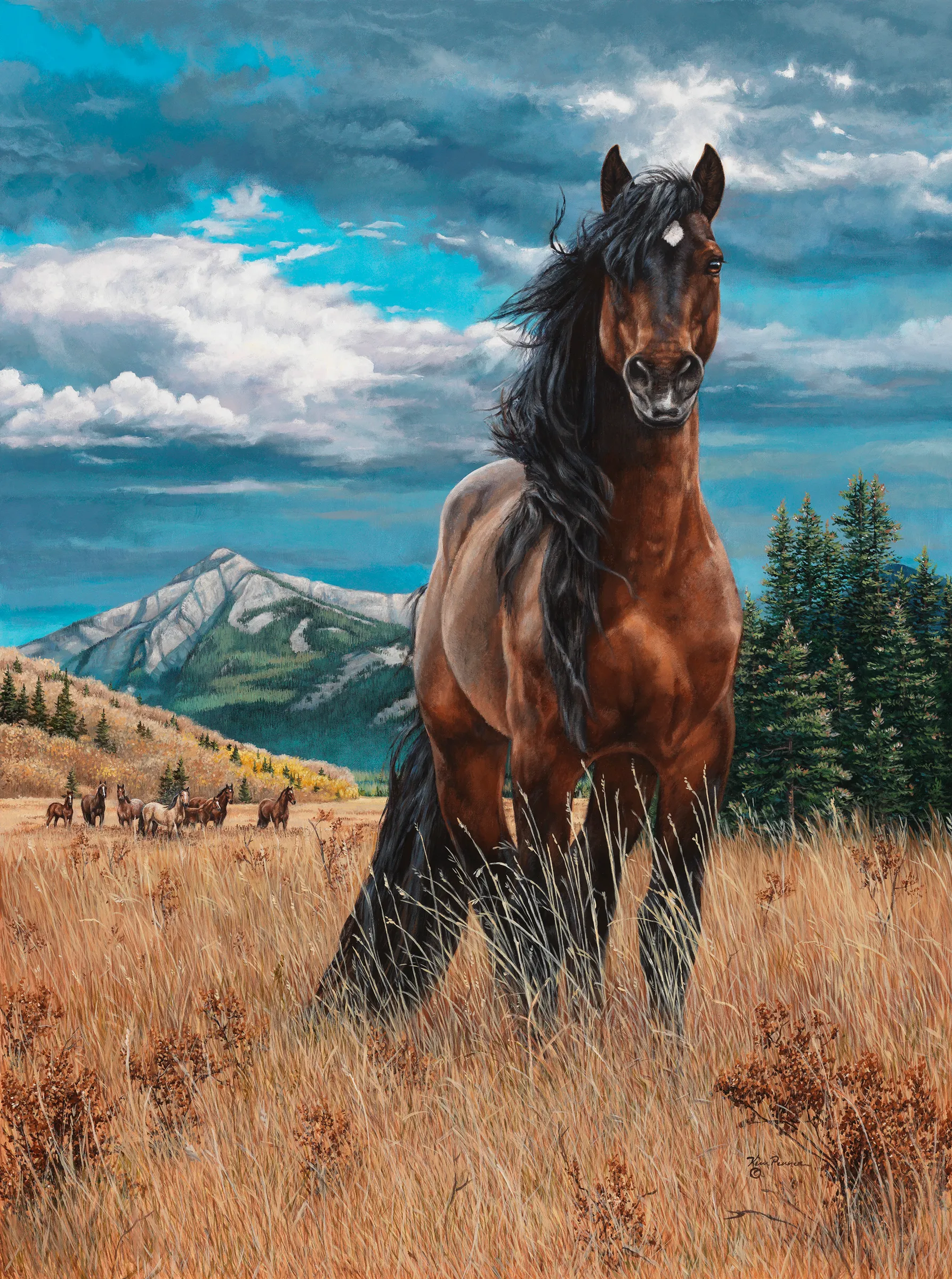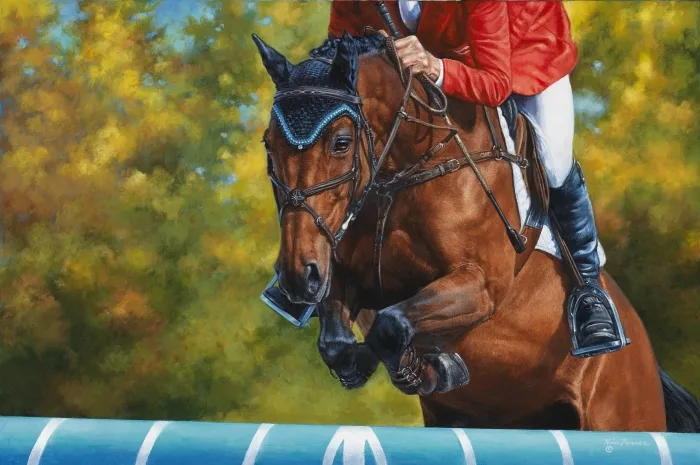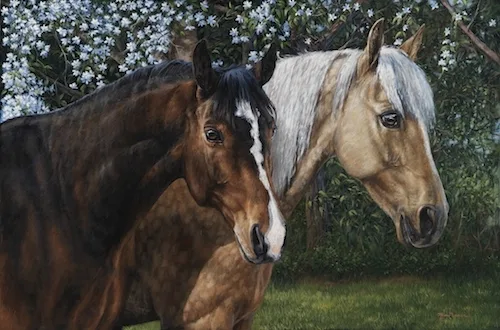
A painted horse portrait begins long before acrylic reaches the painting surface. It begins with photographs that reveal the horse's structure, markings, expression and way of carrying itself.
The most useful reference image is not necessarily made with an expensive camera. A clear phone photograph taken in thoughtful light can provide far more information than a heavily edited image in which the horse is small, shadowed or distorted.
There is also no need to capture everything in one flawless frame. A varied group of photographs is often more useful because each view can answer a different question.
Begin with a comfortable horse
Choose a familiar, secure place where the horse can stand and move naturally. Whenever possible, work with another experienced person: one person can handle the horse while the other takes photographs. Never create tension or compromise safe handling for the sake of a pose.
Give the horse time to look around and settle. Character often appears between formal poses: a glance toward a pasture mate, an attentive turn of the ear or a quiet stance that the owner recognizes immediately.
Groom the horse as it should be remembered. Decide whether the finished portrait should include a natural or braided mane, a halter, a show bridle or no tack. If a particular saddle, blanket, ribbon or piece of equipment belongs in the story, photograph it clearly too.
Use light that reveals form
Soft daylight is an excellent starting point. An overcast day or open shade can reveal the planes of the face, the shape of the legs and subtle coat markings without harsh patches of light and shadow.
In stronger sunlight, look carefully at what is happening across the horse's body. Deep shade over the eyes, glare on a pale coat or broken shadows from a fence can conceal important information. Barns and indoor arenas can work, but check that the resulting photographs are sharp and that artificial lighting has not dramatically changed the coat colour.
Avoid filters and dramatic edits. Keep the original images so that colour, markings and proportions remain as reliable as possible.
Step back to protect the proportions
A phone held very close to a horse's face can make the muzzle look unusually large while the rest of the head recedes. When space permits, take several steps back, keep the camera level and photograph from roughly the horse's height rather than pointing steeply down from above.
Leave space around the ears, hooves and tail, and keep uncropped versions of the photographs. Extra space gives the artist more compositional freedom. Take both horizontal and vertical frames. For a full-body reference, try to keep all four feet visible and avoid placing a fence rail directly across the body.
Then change position. A straight side view records overall conformation and markings. A three-quarter view shows the depth of the chest, shoulder and face. Front and opposite-side views may reveal details that the favourite photograph misses.
Build a useful reference set
Think of the photographs as a visual introduction to the horse. A helpful group may include:
- a clear full-body view from each side;
- a three-quarter view showing the head, neck and body together;
- close views of the eyes, forehead, muzzle and ears;
- socks, blazes, brands, scars, whorls and other identifying details;
- the mane and tail in their natural colour and texture;
- a familiar expression or movement;
- any tack, awards, landscape or stable details that may be discussed for the portrait.
Do not discard a photograph simply because the background is unattractive. A cluttered barn aisle may contain the clearest record of an eye, marking or stance. Conversely, a beautiful sunset silhouette may provide wonderful atmosphere while showing too little anatomical information to stand alone. Both can contribute something different.
Photograph movement safely
If movement is important to the portrait, photograph it only in a suitable enclosure with capable help. A camera or phone's continuous-shooting mode can capture a sequence without requiring the photographer to anticipate one perfect instant. Stay outside the horse's path and maintain a safe working distance.
Include standing photographs even when the hoped-for composition involves running, working or jumping. Quiet views often preserve details that movement, distance or dust can hide.
Consider the setting and mood
Some owners want a recognizable place in the portrait: a home pasture, mountain trail, show ring or favourite barn. Others want a simpler setting that keeps attention on the horse. Photograph meaningful locations without the horse as well as with it, and make notes about the season, time of day and atmosphere that matter.
These images are reference material, not a promise that every separate element can be combined. Composition is developed as part of the consultation, with the horse's anatomy, the painting's proportions and the desired mood considered together.
When the photographs are old or imperfect
Sometimes a portrait is commissioned after a horse is gone, making new photographs impossible. A faded print or older phone photograph may still contain valuable information. Gather the clearest versions available, including images from different years and angles, and identify what each one captures accurately.
More photographs can help fill gaps, but they cannot always recover details that were never recorded. Avoid trying to rebuild missing information with filters or artificial sharpening. The studio can assess the available references honestly during the initial conversation.
Include the horse's story
The written context matters alongside the photographs. Share the horse's name, character and the memory the portrait should hold. Point out colours or markings that cameras reproduce poorly. Identify the few images that feel most true to the horse and explain why.
If a professional photographer or another person created an image, make sure permission has been obtained for it to be used as artistic reference. Owning a copy of a photograph does not always include the right to authorize a new work based on it.
What happens after the photographs are gathered?
Kim Penner's commission process begins with a no-obligation conversation about the horse, setting, mood, size and timeline. Kim works from the owner's photographs and her own studies, then shares a sketch or composition for approval before painting begins. The references form the foundation, but the completed work is a considered original acrylic painting rather than a mechanical copy of one frame.